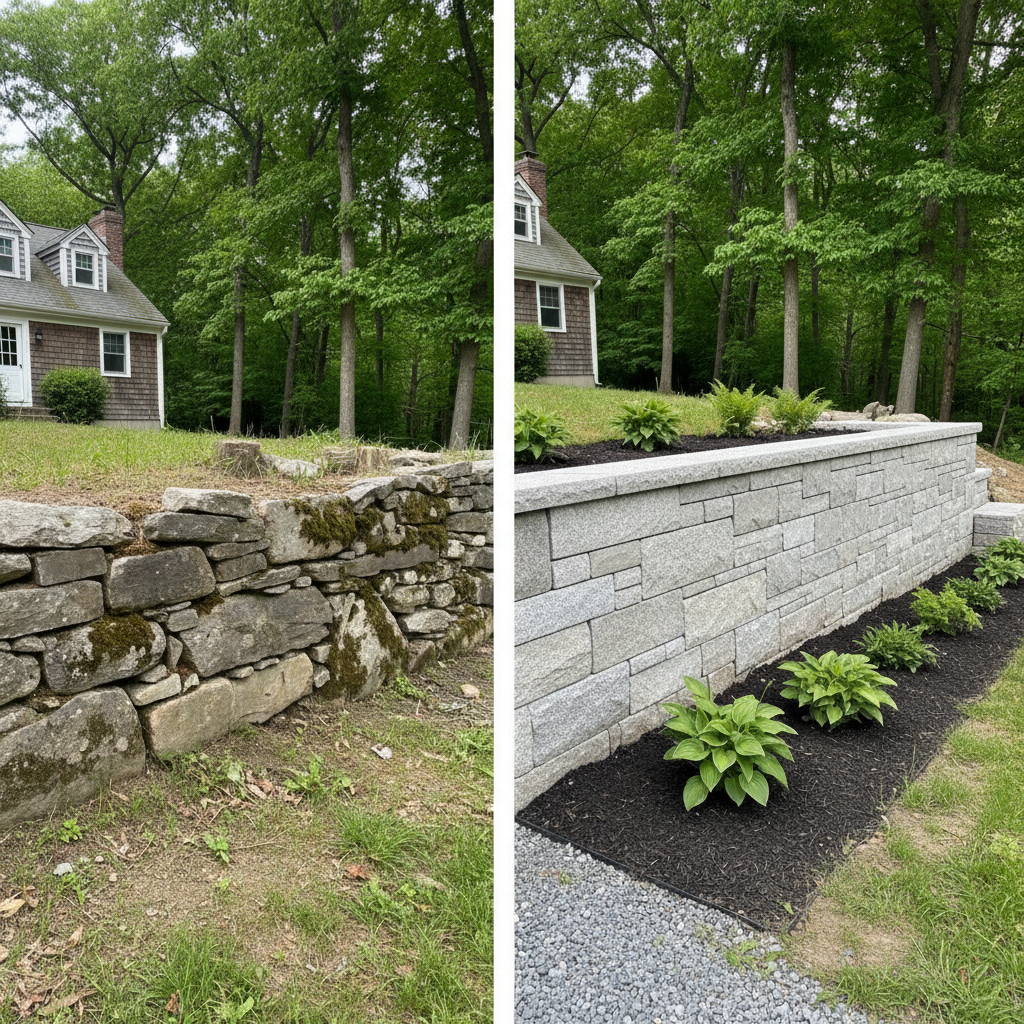
Thinking about adding some stone to your place? Maybe a new patio, a retaining wall, or even a walkway? Smart move! Stone work really adds a ton of character and boosts property value. But right from the start, you've got a big decision ahead: are you going with wet-laid or dry-laid stone?
I see folks in Weston grapple with this all the time. Both methods definitely have their place, but they're not interchangeable, not by a long shot. Let's dig into what each one means for your project, your bank account, and how long it'll actually last.
What's the Difference?
It's pretty much exactly what it sounds like. With wet-laid stone, we're using mortar—that cement-based mix—to stick the stones together and to a concrete foundation or base. Picture your classic stone wall or a patio where the stones are set solid, with mortar filling the joints.
Dry-laid stone, on the flip side, uses no mortar at all. The masons carefully place and interlock the stones, relying on gravity, friction, and their own skill to keep everything in place. Often, we fill the joints with gravel, sand, or even soil if you want to plant something there. Think of those old New England stone walls, or permeable paver systems.
Wet-Laid Stone: The Solid Choice
For a lot of projects, especially here in Massachusetts, wet-laid stone is the standard. Why's that?
- It's Tough and Stable: When we do it right, wet-laid stone is incredibly strong and super stable. The mortar creates one solid structure that can handle a lot of wear and tear, heavy foot traffic, and our wild freeze-thaw cycles. It won't shift or settle easily.
- Low Upkeep: Once it's in, it pretty much stays put. You won't get weeds sprouting between the stones like you might with a dry-laid system, and you don't have to worry about sand washing away.
- So Many Options: You can build almost anything with wet-laid stone—intricate patios, steps, fireplaces, really sturdy retaining walls, even stone veneers on your house. The mortar lets us shape and level things much more precisely.
- Looks Good: Many people just prefer the clean, finished look of mortared joints. It can look very formal, very intentional.
Now, it's not all perfect, of course. The biggest downside? Cost. It takes more work because you're mixing and applying mortar, and it often needs a concrete foundation, which adds to both material and labor expenses. Plus, you've got to be smart about drainage; if water gets trapped behind a mortared wall, you're looking at potential headaches down the road. And if the mortar cracks over time, you'll need to repoint it—another maintenance job.
Dry-Laid Stone: Natural & Flexible
Dry-laid stone has a charm all its own, and it's absolutely fantastic for certain projects.
- Lets Water Through: This is a huge benefit, especially with all the talk about stormwater runoff these days. Dry-laid systems let water drain right through the joints and into the ground. That's great for the environment, and it can really help with drainage problems on your property. This is super useful in parts of Weston with clay-heavy soils, where water tends to just sit on the surface.
- Can Be Cheaper (Sometimes): For simpler projects like garden walls or pathways, dry-laid can be less expensive up front because you skip the cost of mortar or a concrete slab.
- Natural Vibe: It has a more rustic, organic look that just blends beautifully with natural landscapes. Think of those old farm walls you see all over New England.
- It Flexes: Since there's no rigid mortar, dry-laid structures can move a little with ground shifts or freeze-thaw cycles without cracking. That's a big plus in areas where the ground tends to shift.
- Easier to Fix: If a stone gets damaged or moves, it's usually simpler to pull it out and replace it without having to chip away mortar.
The downsides? Stability can be a real problem if someone who doesn't know what they're doing installs it. A poorly built dry-laid wall will eventually sag or just collapse. Weeds love to grow in the joints, and you'll need to top up the sand or gravel periodically. Generally, it's not the right choice for structural stuff that needs to hold heavy loads, like a foundation or a super tall retaining wall holding back a lot of earth. Oh, and for patios, furniture legs can sometimes get caught in those wider joints.
My Recommendation for Weston Homeowners
For most applications around here, especially anything that needs to stand up to our harsh winters and heavy use, I usually lean towards wet-laid stone. For patios, steps, and load-bearing retaining walls, the stability, durability, and lower long-term maintenance (aside from maybe repointing every now and then) of a properly installed wet-laid system usually make the higher initial cost worth it.
You want something that's going to last for decades without constant fuss, right? Wet-laid delivers on that. The ground here in Weston, with its mix of rocky outcrops and sometimes less-than-ideal drainage, really benefits from the solid foundation and structural integrity that mortar provides.
However, if you're looking for a permeable pathway, a decorative garden wall that isn't holding back a ton of earth, or just a more natural, informal look, dry-laid stone is a fantastic choice. Just make absolutely sure you hire someone who truly understands dry-stacking. It's an art, not just piling rocks.
Ultimately, it all boils down to your specific project, your budget, and the look you're after. We at Alpha Masonry Solutions can walk you through the best approach for your property and make sure whatever you choose, it's built to last.