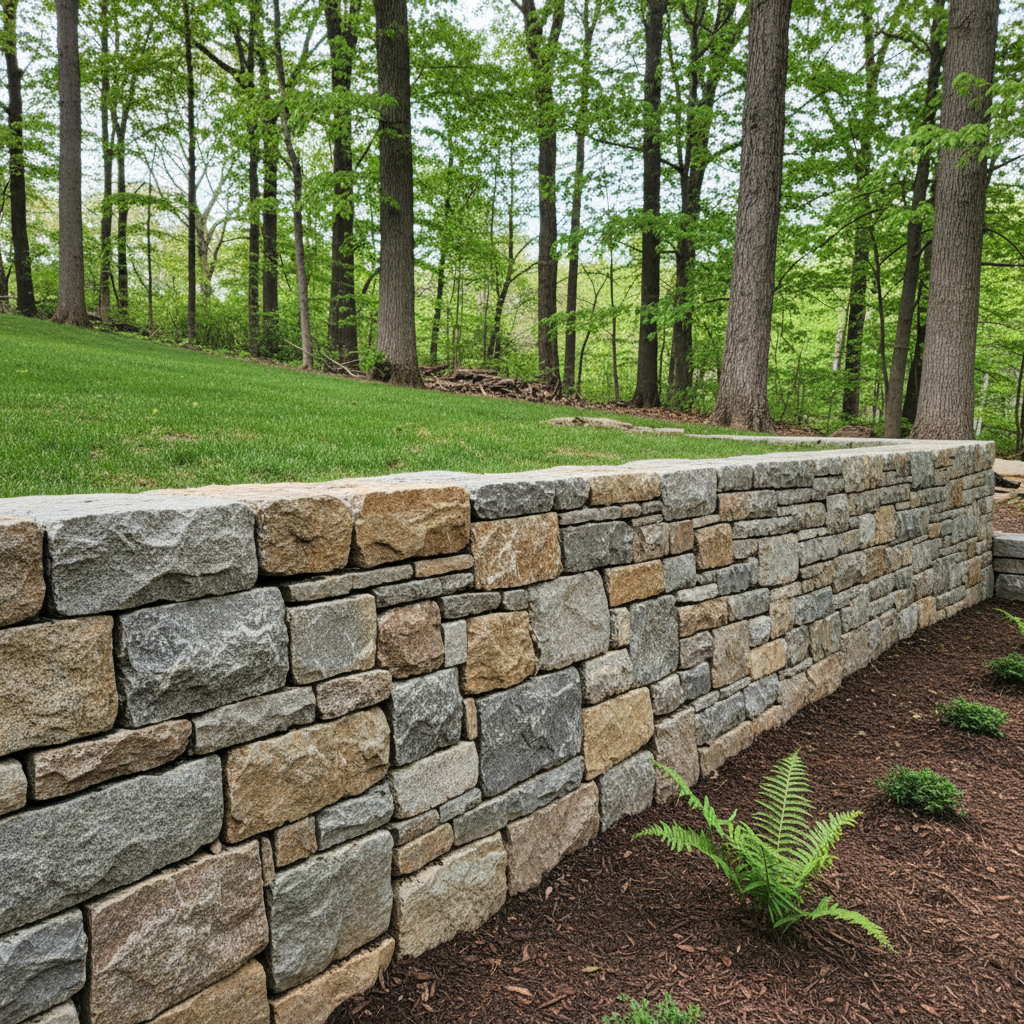
Got a slope in your yard? Maybe you're looking to create more usable space, prevent erosion, or just add some visual interest. A retaining wall can do all that, and I get a lot of questions from Weston homeowners about whether it's a project they can take on themselves. Let's break down what you need to know, from planning to finishing up.
Before You Dig: Planning Your Retaining Wall
This is where most DIYers get into trouble. Or, if they're smart, it's where they save themselves a lot of headaches. You can absolutely do some of the upfront work yourself, but you've got to be thorough.
- Understand Your Soil: Weston's got a mix of soil types, but we often deal with a lot of rocky, glacial till. That's good for drainage, but man, it can make digging a real chore. If your soil is very sandy or very clay-heavy, that changes how the wall needs to be built. You might need to consider extra drainage or a wider base.
- Check Local Codes: This is non-negotiable. Most towns, including Weston, have rules about retaining wall height, setback from property lines, and drainage. Walls over a certain height (often 3-4 feet) almost always need a permit and engineered drawings. Don't skip this; you don't want to build something only to have to tear it down later.
- Utility Lines: Call Dig Safe (811) before you even think about putting a shovel in the ground. It's free, it's the law, and it prevents you from hitting a gas line or an electrical conduit. Seriously, don't mess around with this one.
- Drainage, Drainage, Drainage: I can't stress this enough. Water pressure behind a retaining wall is its biggest enemy. If you don't plan for proper drainage, your wall will fail, guaranteed. This means crushed stone backfill, perforated pipes (weep holes), and possibly geotextile fabric.
For walls under 2 feet, in stable soil, without significant load behind them (like a driveway or a house foundation), you might be able to handle the planning yourself. Anything taller, or with any kind of pressure behind it? You really need to talk to an engineer or an experienced contractor like Alpha Masonry Solutions. We've seen too many walls fail because someone tried to guess on the engineering.
During Construction: Getting Your Hands Dirty (or Not)
So, you've got your plan, your permits, and you know where the utilities are. Now for the actual build.
- Excavation: For smaller walls, you can probably dig the trench yourself. It's hard work, especially if you hit those Weston rocks, but it's doable. The trench needs to be level and deep enough for your base course and a proper gravel footing.
- Base Prep: This is crucial. A well-compacted gravel base (typically 6-12 inches deep) is what your wall sits on. If this isn't solid and level, your wall will settle unevenly and eventually crack or lean. You'll need a plate compactor for this, which you can rent.
- Laying Blocks/Stones: For segmental retaining walls (SRW blocks), laying the first course perfectly level is the most important step. Every subsequent course builds on that. For natural stone walls, it's a whole different ballgame. That takes skill in stone selection, shaping, and fitting—it's an art form, really.
- Backfill and Drainage: As you build up, you need to backfill with crushed stone right behind the wall, and lay your drainage pipe. This prevents hydrostatic pressure from building up.
For walls up to 2-3 feet, using SRW blocks, a capable DIYer can often manage this. It's physically demanding, and you need to be super careful with leveling and compaction. But if you're talking about a tall wall, a curved wall, or anything with significant structural requirements, that's definitely contractor territory. We have the heavy equipment, the experience with complex designs, and the crew to get it done safely and efficiently.
After the Build: Maintaining Your Investment
Once your retaining wall is up, you're not entirely done. A little maintenance goes a long way to ensure it lasts for decades.
- Check Drainage: Periodically inspect your weep holes or drainage outlets. Make sure they're not clogged with leaves or debris. Proper drainage is key to the wall's longevity.
- Look for Movement: Walk along your wall occasionally. Are there any new cracks? Is it leaning? Are blocks shifting? Catching these issues early can prevent a major problem.
- Vegetation: Keep large trees and shrubs a reasonable distance from the wall. Their roots can exert pressure and damage the structure over time. Smaller plants and ground cover are usually fine, and can even help with erosion on the slope above the wall.
- Clean It: A good power wash every now and then can keep your wall looking fresh, especially if it's exposed to a lot of dirt or mildew.
Maintaining a retaining wall is definitely a DIY job. You're just keeping an eye on things and doing some basic cleaning. If you spot significant issues like leaning or large cracks, that's when you call in a professional. It often means there's a deeper structural problem that needs expert assessment and repair.
Building a retaining wall is a big project, and it's one where cutting corners can lead to expensive failures. Know your limits, respect the engineering, and don't hesitate to bring in the pros when the job gets beyond your comfort zone. We're here to help make sure your Weston property looks great and stays stable.