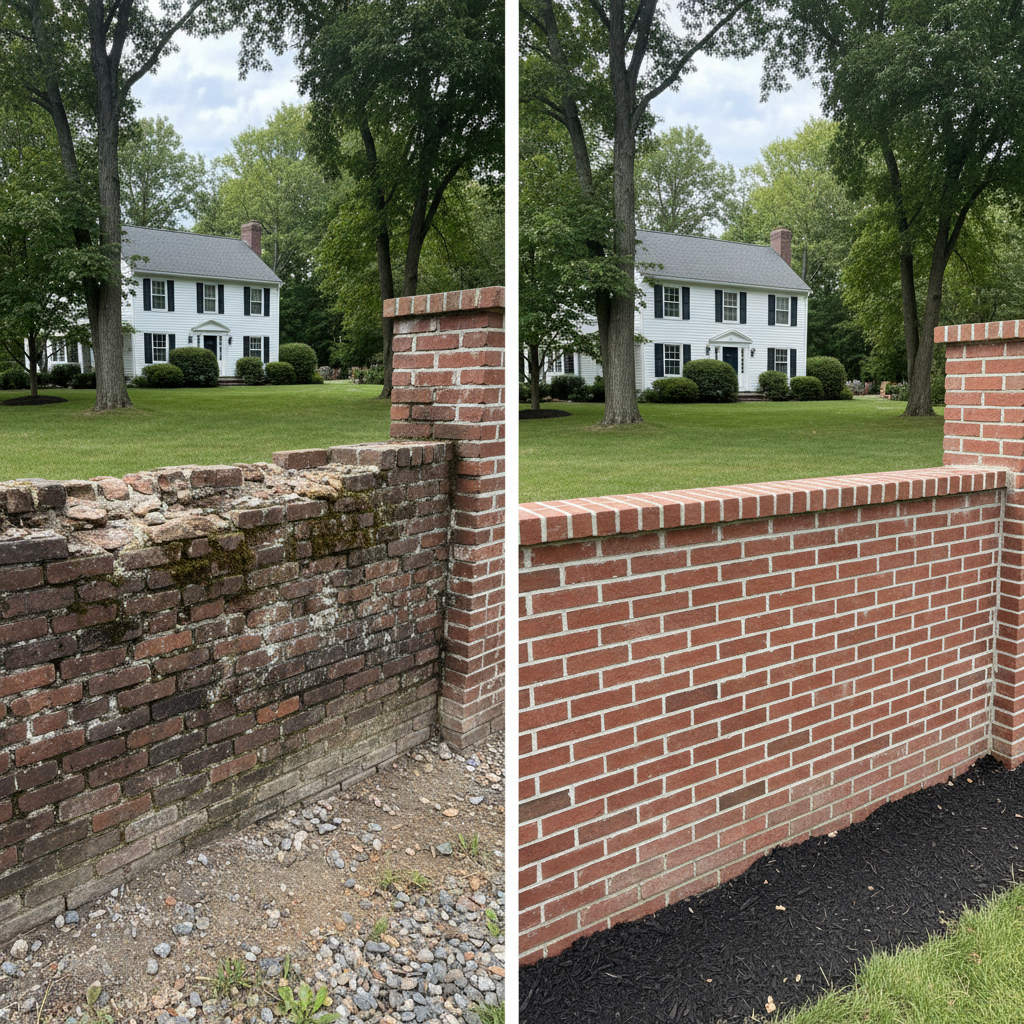
So, you're picturing new brickwork for your Weston home, right? Maybe a patio, a retaining wall, or even some much-needed chimney repairs. You've probably spent ages picking out the perfect brick, but have you given any thought to the mortar joints? It might seem like a tiny detail, but how that mortar is finished can totally change the whole look of your project and, more importantly, how long it lasts. Today, I want to chat about two common types: flush joints and recessed joints.
What's the Real Difference?
It's pretty much exactly what it sounds like. With a flush joint, we trim and press the mortar so it's perfectly even, or 'flush,' with the brick's face. This creates a smooth, flat surface. Think of it as a seamless transition between the brick and the mortar itself.
A recessed joint, though, is raked back. That means we deliberately set the mortar back from the brick's face, which creates a shadow line. You'll definitely notice the edges of each brick standing out more.
Appearance: What Kind of Vibe Are You Going For?
This is where your personal taste really comes into play. A flush joint gives you a very clean, uniform, and often more contemporary look. The brick itself tends to be the star here; the mortar just blends in, creating a more solid, monolithic surface. If you're aiming for a sleek, understated aesthetic, flush might be your best bet. It can make a wall look incredibly solid and continuous, don't you think?
Recessed joints, on the other hand, really make individual bricks pop. That shadow line highlights each one, giving the wall more texture and depth. It's a classic look, often found on older, more traditional homes, and it can add a ton of character. If you've got some beautiful, unique bricks you're eager to show off, a recessed joint will absolutely do the trick.
Durability and Maintenance: The Practical Side of Things
Now, let's talk about what truly matters in a place like Weston, where we experience all four seasons and then some. This is where the practical differences between flush and recessed joints become super important.
- Flush Joints: When the mortar sits flush with the brick face, it offers fantastic protection against water getting in. There's no little ledge or recess for water to collect. Rain just runs right down the surface. This is a huge deal in Massachusetts, especially with our constant freeze-thaw cycles. Water seeping into those tiny cracks, then freezing and expanding, is what really wrecks masonry over time. A flush joint minimizes that risk. It's generally more durable and needs less maintenance in the long run because it's simply better at shedding water.
- Recessed Joints: Because the mortar is set back, it forms a small ledge. That ledge can catch water, snow, and ice. Over time, that constant exposure to moisture, especially during our harsh winters, can make the mortar deteriorate faster. You might see spalling (where the face of the mortar flakes off) or cracking sooner than you would with a flush joint. This means recessed joints often require more frequent inspections and repointing to keep them in good shape.
Cost Considerations
Honestly, the cost difference between these two joint types usually isn't a deal-breaker. Both require skilled masons, after all. A recessed joint might take a tiny bit more time to rake out consistently, but it's not a huge jump in labor or material costs compared to the overall project. What you should really focus on is finding a skilled mason who can execute either joint type cleanly and correctly. A poorly done flush joint is just as bad as a poorly done recessed joint, wouldn't you agree?
My Recommendation for Weston Homes
Given our climate here in Weston — those icy winters, the heavy spring rains, and the general exposure to the elements — I almost always lean towards a flush joint for exterior brickwork. It just holds up better. You want your masonry to last, and a flush joint is simply more weather-resistant. It's a smart choice for longevity and lower maintenance, especially for things like chimneys or foundations that really take a beating.
Now, if you're doing interior brickwork, or maybe a covered patio where weather isn't a huge concern, then a recessed joint is perfectly fine if you love the look. It's all about context. But for anything exposed to the elements, particularly with those older homes in the Merriam Hill area that have seen a lot of winters, you'll be happier with the durability of a flush joint.
At Alpha Masonry Solutions, we've seen firsthand what years of New England weather can do. We always talk through these options with our clients, making sure you understand the pros and cons for your specific project. It's about building something that not only looks great but truly stands the test of time.